The Gut-Brain Connection: Why Your Stomach Holds the Key to Your Happiness

We’ve all felt it the “butterflies” in our stomach before a big presentation or that “sinking feeling” when we hear bad news. For the longest time, I thought these were just metaphors or mental tricks our mind played on us. But as I dove deeper into my own wellness journey, I realized a profound truth: my gut was actually a “second brain” in constant dialogue with my primary one.
If you’ve been feeling foggy, anxious, or just “off” lately, the answer might not be in your head. It might be sitting on your plate.
1. My Personal Wake-Up Call: The Bloated Brain

A few years ago, I was living on high-stress projects and even higher-processed snacks. I was constantly irritable, and I couldn’t focus for more than ten minutes at a time. I blamed my job, my lack of sleep, and even my personality. I genuinely thought I was just “losing my edge” as I got older.
The Experience: I remember one Tuesday afternoon, right after a heavy fast-food lunch, I had a minor panic attack over a simple, routine email. It felt completely irrational. My heart was racing, and my palms were sweating over a query that should have taken two minutes to answer. That’s when I started researching the enteric nervous system. I realized that by mistreating my stomach, I was literally starving my brain of the chemicals it needed to stay calm. When I finally switched to whole, natural foods, that “mental fog” didn’t just lift; it evaporated. I wasn’t less busy, but I was suddenly more “capable.”
2. The Science: Why Your Gut is Your “Second Brain”

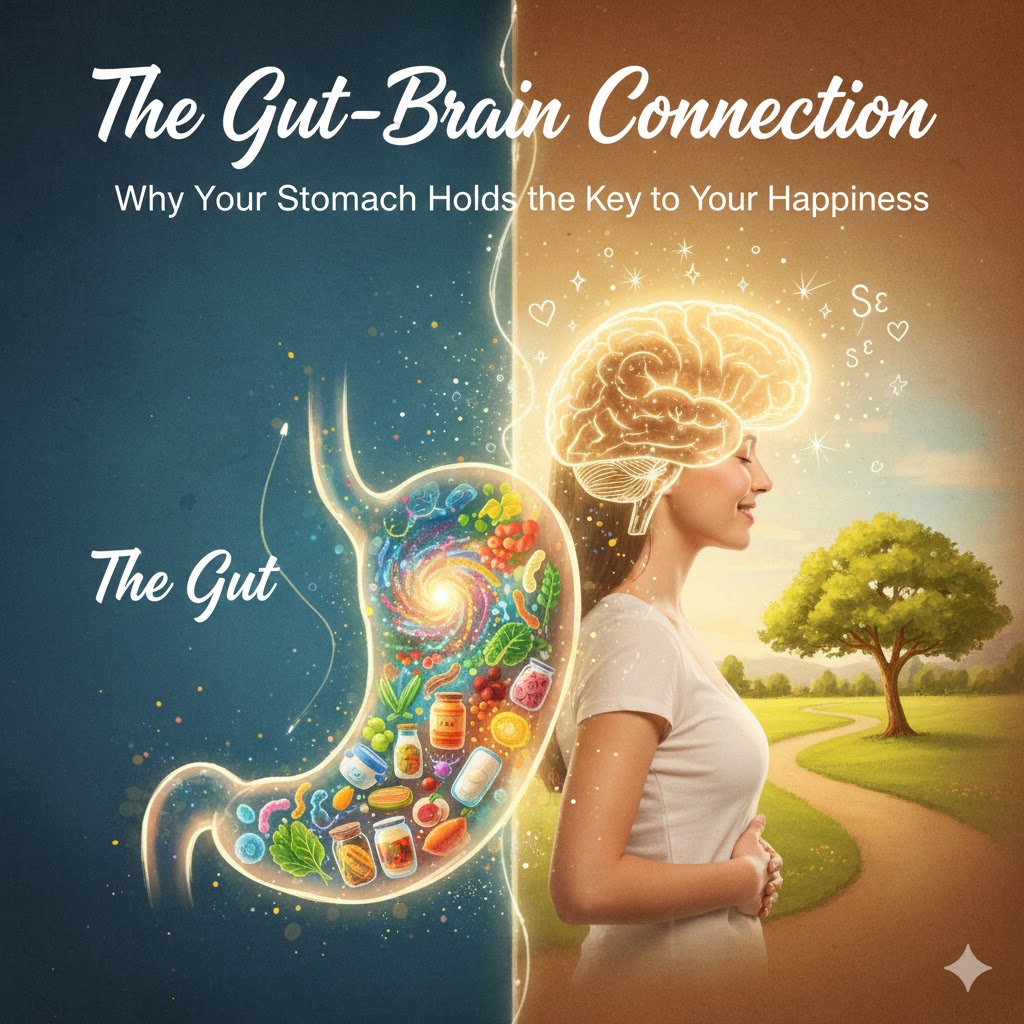
Did you know that your gut contains over 100 million nerve cells? That’s more than your spinal cord. Scientists now understand that the gut and brain are linked through the Vagus Nerve, creating a high-speed data highway. Interestingly, about 90% of your Serotonin the hormone responsible for happiness and mood stability is produced in your gut, not your brain.
If your gut microbiome (the colony of trillions of bacteria living inside you) is imbalanced due to poor diet, antibiotics, or chronic stress, your brain literally loses its supply of happiness. This is why Soft Productivity is so hard to achieve when you’re eating junk. Your brain is struggling to function because your gut is in a state of constant inflammation.
3. The Cycle of Stress and Digestion

Stress isn’t just a mental state; it’s a physical one that alters your biology. When you are stressed, your body enters “Fight or Flight” mode, which diverts blood away from your digestive system to your muscles.
The Experience: During my busiest months working in IT, I would eat while typing. I wasn’t chewing; I was just swallowing while my mind raced through lines of code and looming deadlines. I developed chronic bloating and, along with it, chronic anxiety. I realized I was trapped in a vicious loop: stress caused bad digestion, and bad digestion caused more anxiety. I had to learn to set a “hard boundary” for my lunch. Once I started eating in silence giving my body just 15 minutes of peace without a screen my digestion improved, and my afternoon “anxiety spikes” disappeared almost overnight.
4. The “Hidden Killers” in a Professional’s Diet

In our modern, fast-paced work culture, we are surrounded by things that quietly sabotage our gut health:
- Artificial Sweeteners: Often found in “Diet” sodas, these can wreak havoc on gut bacteria, leading to sudden mood swings and sugar cravings.
- The Caffeine Trap: We use coffee to mask fatigue, but excessive caffeine irritates the gut lining and keeps our stress hormones (cortisol) unnaturally high.
- Processed Sugar: It feeds the “bad” bacteria in the gut, leading to that 3 PM brain crash that makes us reach for even more sugar.
5. Practical Steps to Heal Your Gut (and Your Mind)

You don’t need a radical lifestyle overhaul or expensive supplements. Start with these “Human” steps:
- Eat “Live” Foods: Incorporate yogurt, kimchi, or traditional home-made fermented pickles. These are packed with natural probiotics that act as “peacekeepers” for your brain.
- The 30-Chew Rule: Digestion starts in the mouth. Chewing your food properly reduces the load on your gut, leaving more energy for your brain to stay productive.
- Hydrate with Intent: Instead of a fourth cup of coffee, try warm lemon water or ginger tea. It soothes the gut-brain axis and reduces internal inflammation.
- Micro-Fasting: Give your gut a break. Try to maintain a 12-hour gap between your dinner and breakfast (e.g., 8 PM to 8 AM). This allows your “second brain” to perform its internal cleaning.
6. The Long-Term Impact: Upgrading Your Hardware

When you fix your gut, you aren’t just fixing bloating; you are upgrading your mental hardware. You become more resilient. You find that you can handle a “No” from a client or a sudden deadline crunch without falling apart emotionally.
The Experience: Nowadays, when I feel a wave of unexplained anxiety or irritability, the first thing I ask myself isn’t “What’s wrong with my life?” but “What have I eaten in the last 24 hours?” Nine times out of ten, the fix is a glass of water, a walk, and a probiotic-rich meal, not a therapy session. I’ve learned to trust my gut literally.
7. Conclusion: Listen to Your Body
Your body is a finely tuned instrument. If you are feeling burnt out, don’t just look at your calendar look at your kitchen. Healing your gut is the first step toward reclaiming your mental clarity and living a truly balanced life. Your happiness is literally growing in your gut; give it the right environment to thrive.
Frequently Asked Questions (FAQs)
1. What exactly is the Gut-Brain Connection? The Gut-Brain Connection is the bidirectional link between your central nervous system and the enteric nervous system in your gut. They communicate constantly through the Vagus nerve, meaning your digestive health directly influences your mood, focus, and stress levels.
2. How does poor gut health affect my mental health? Since about 90% of your body’s Serotonin (the “happiness hormone”) is produced in the digestive tract, an imbalanced gut can lead to “brain fog,” increased anxiety, and irritability. Poor gut health and mental health are often a cycle where one physical issue triggers an emotional response, and vice-versa.
3. What are the best foods to improve the Gut-Brain Connection? To strengthen this bond, focus on “live” foods rich in probiotics like yogurt, kefir, and fermented vegetables. Additionally, high-fiber foods like oats, beans, and colorful fruits feed the “good” bacteria that help produce mood-stabilizing chemicals for your brain.
4. Can stress cause gut problems? Yes. When you are stressed, your brain triggers a “fight or flight” response that slows down digestion. This can lead to bloating, discomfort, and inflammation, which then sends stress signals back to the brain, creating a continuous loop of physical and mental exhaustion.
Welcome to AuraFitLife! AuraFitLife is a wellness-focused platform providing informative content on fitness workouts, mental health awareness, and healthy living. Muhammad Azam follows ethical content guidelines and prioritizes accuracy, clarity, and reader value. We are committed to sharing practical, research-based information that supports healthier and more balanced lifestyles