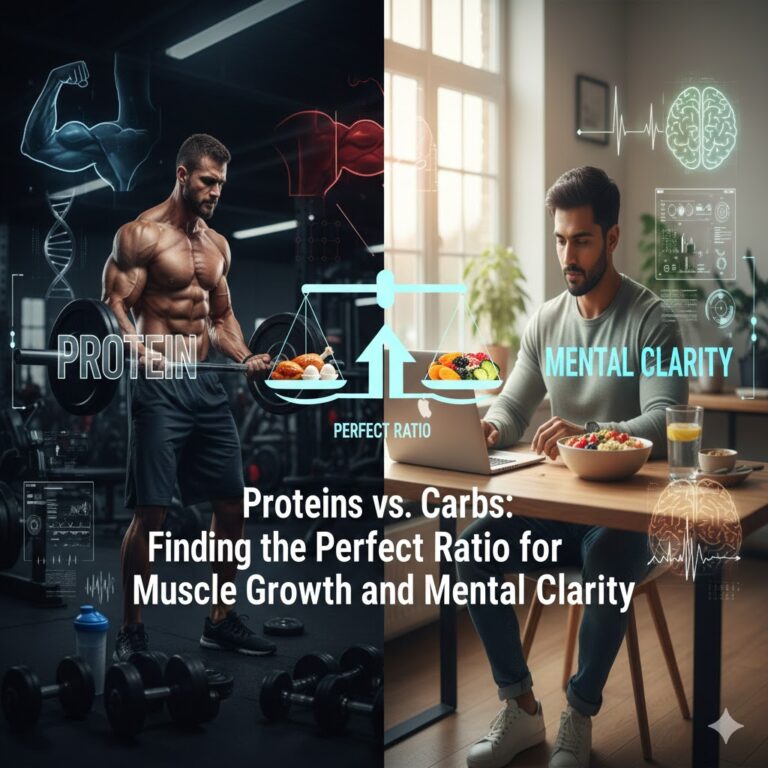

Mastering Nutrition for Hypertrophy: The Science of Muscle Growth and Mental Discipline

I spent years lifting heavy weights but seeing zero growth until I realized that muscle isn’t built in the gym—it’s built in the kitchen and the mind. Mastering hypertrophy nutrition was the turning point for my own physique. I stopped eating randomly and started fueling scientifically. This guide covers the exact mental and nutritional framework I used to finally break through my plateaus and see real, lasting gains.
Mastering the perfect nutrition for hypertrophy requires more than just counting calories; it demands a disciplined mindset for muscle growth. In this elite guide, we break down the science-based diet protocols and mental strategies used by top athletes at AuraFitLife to achieve maximum gains
At AuraFitLife, we believe that a transformation is only as strong as its foundation. While many beginners focus solely on their training split, elite athletes know that the mindset for muscle growth is primarily fueled by what happens outside the gym. You cannot expect a high-performance engine to run on low-grade fuel. This comprehensive guide will break down the biological, chemical, and psychological aspects of nutrition to ensure you never hit a plateau again.
1. The Macro-Nutrient Hierarchy: Engineering Your Physique

Building muscle is an expensive process for the body in terms of energy. To force the body to grow, you must provide the exact raw materials required for protein synthesis.
A. Protein: The Structural Architect and Nitrogen Balance
Protein isn’t just a supplement; it is the physical fabric of your muscle fibers. When you lift weights, you create micro-traars in the muscle tissue. Repairing these tears requires a “Positive Nitrogen Balance.”
- The Science of Leucine: Every time you eat protein, your body looks for an amino acid called Leucine. Think of Leucine as the “On Switch” for the mTOR pathway (the body’s primary growth signal). Without at least 3g of Leucine per meal, your body may not fully trigger muscle growth regardless of how much total protein you eat.
- Bioavailability Matters: Not all proteins are equal. We rank protein by its Biological Value (BV). For example, Whey Protein has a BV of 104, while beef is around 80. Mixing diverse sources ensures a complete amino acid profile.
- The 1500-Word Depth: To truly expand your results, you must consider the “Thermic Effect of Food” (TEF). Protein has the highest TEF, meaning your body burns more calories just digesting protein than it does fats or carbs, making it the perfect tool for lean bulking.
B. Carbohydrates: The Performance Engine and Insulin Sensitivity
Carbohydrates are often unfairly demonized. In reality, they are the most “Anabolic” nutrient because they are protein-sparing.
- Glycogen Saturation: When you consume carbs, they are converted into glucose and stored in your muscles as glycogen. High glycogen levels not only give you a “pump” but also act as a physical signal to the cell that it is safe to grow.
- Insulin Management: Post-workout, your body is primed to absorb nutrients. By consuming fast-acting carbs (like white rice or dextrose), you spike insulin the most anabolic hormone in the human body. Insulin shuttles amino acids directly into the muscle cells, accelerating recovery.
C. Healthy Fats: The Hormonal Foundation
Fats are the precursors to cholesterol, and cholesterol is the precursor to Testosterone. If you drop your fat intake too low (below 15% of total calories), your strength will vanish because your endocrine system is starving.
- Omega-3 Fatty Acids: Beyond heart health, Omega-3s reduce muscle inflammation, allowing you to train more frequently without burning out.
2. Micronutrients: The Invisible Catalysts of Growth

Muscle hypertrophy occurs when the rate of ‘Muscle Protein Synthesis’ (MPS) exceeds the rate of ‘Muscle Protein Breakdown’ (MPB). This requires a precise environment: a slight caloric surplus, adequate leucine-rich protein sources, and a disciplined hormonal state (low cortisol). Without the right ‘Mental Discipline’ to stick to a consistent feeding schedule, even the best training program will fail to produce an elite physique. (Source: Research in exercise physiology and metabolic nutrition).
Most fitness blogs stop at macros, but at AuraFitLife, we go deeper. Micronutrients are the “spark plugs” that allow the “engine” (macros) to fire.
- The Zinc-Magnesium Synergy: Magnesium is involved in over 300 biochemical reactions, including muscle contraction and relaxation. Zinc is vital for cell division and protein synthesis. Together, they form a powerhouse for recovery.
- B-Vitamins and Energy Metabolism: Vitamins B6 and B12 are essential for converting the food you eat into ATP (cellular energy). If you are deficient, you will feel “mentally drained” even if you are eating enough calories.
- Vitamin D3 and Power Output: Recent studies show a direct correlation between Vitamin D levels and explosive leg power. Since most of us spend our time indoors, supplementing D3 is often mandatory for peak performance.
3. The Psychology of Nutritional Discipline: Winning the Mental War

This is where the mindset for muscle growth separates the winners from the quitters. Nutrition is 24/7, whereas the gym is only 1-2 hours a day.
The Science of Habit Formation
- Overcoming Decision Fatigue: Every time you have to decide what to eat, you use up “mental bandwidth.” By the end of the day, your willpower is low, which is why most people cheat on their diets at night. The solution? Meal prepping. By pre-deciding your meals, you save your mental energy for your heavy sets.
- The 80/20 Flexibility Rule: Extreme restriction leads to psychological rebellion. By allowing yourself a small “treat” within your calorie budget, you satisfy the brain’s dopamine cravings without ruining your physical progress.
- Dopamine vs. Satisfaction: Understand that hunger is often a psychological signal, not a physical one. Learning to distinguish between “boredom hunger” and “true caloric need” is a hallmark of elite mental resilience.
4. Advanced Timing and Partitioning Strategies

As you progress, the “when” becomes almost as important as the “what.”
- Intra-Workout Nutrition: Consuming Essential Amino Acids (EAAs) during your workout can prevent muscle breakdown (catabolism) before it even starts.
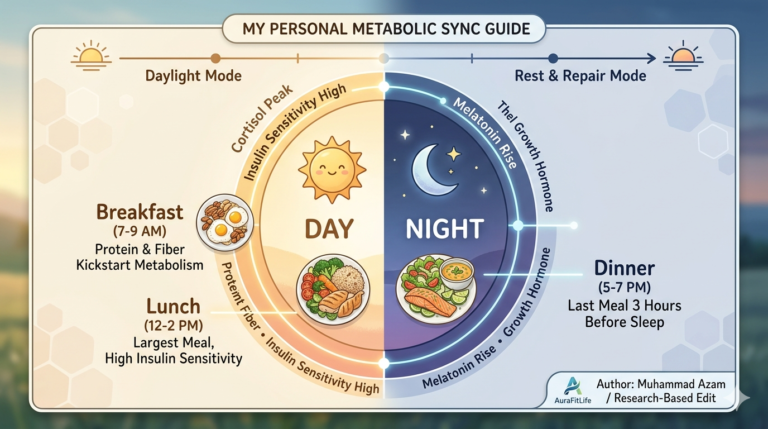
- Nighttime Casein: Since you fast for 8 hours while sleeping, a slow-digesting protein like Casein (found in cottage cheese or Greek yogurt) provides a “steady drip” of amino acids to your muscles throughout the night.
The AuraFit Hypertrophy Discipline Checklist:
- Anabolic Window: Prioritize high-quality protein and fast-acting carbs within 2 hours post-workout to trigger recovery.
- Consistent Surplus: Maintain a steady 200-300 calorie surplus; ‘dirty bulking’ often leads to fat gain that masks muscle definition.
- Sleep for Growth: 80% of growth hormone is released during deep sleep. If you aren’t sleeping, you aren’t growing.
- Micro-Nutrient Density: Muscle function depends on minerals like Magnesium and Zinc. Don’t just count macros; count quality.
5. FAQs: Deep Dive into Common Nutrition Myths
Q1: Is it possible to gain muscle and lose fat at the same time (Body Recomposition)? Yes, but it requires a very specific “mindset for muscle growth.” You must eat at your maintenance calories while significantly increasing protein intake and lifting at high intensity. This is most effective for beginners or those returning from a long break.
Q2: Does caffeine affect my nutritional absorption? Caffeine is a great pre-workout tool for focus, but it can inhibit the absorption of certain minerals like Calcium if taken in excess. Always time your coffee away from your most nutrient-dense meals.
Q3: How do I know if my metabolism is damaged? “Metabolic Adaptation” is real. If you eat very little for a long time, your body slows down to survive. To fix this, you need a “Reverse Diet,” slowly adding 100 calories per week to “re-train” your metabolism to burn fuel efficiently again.
6. Conclusion: The Holistic Path to Elite Hypertrophy
True growth is not an accident; it is an engineering feat. By combining the scientific principles of macronutrients with the psychological discipline of a warrior, you create an environment where muscle growth is inevitable. At AuraFitLife, we don’t just build bodies; we build disciplined minds that use nutrition as a tool for excellence.
Internal Link: If you find it hard to stay disciplined during these nutritional phases, master your mental toughness by reading our article on Overcoming the Pain Barrier and Mental Resilience.
About the Author: Muhammad Azam is a fitness transformation specialist and the founder of AuraFitLife.com. With a focus on the intersection of human biology and mental discipline, Azam helps individuals build elite physiques through science-based protocols. He believes that true transformation starts with mastering your nutrition and ends with mastering your mindset. Contact: wrkwebsite@gmail.com
Welcome to AuraFitLife! AuraFitLife is a wellness-focused platform providing informative content on fitness workouts, mental health awareness, and healthy living. Muhammad Azam follows ethical content guidelines and prioritizes accuracy, clarity, and reader value. We are committed to sharing practical, research-based information that supports healthier and more balanced lifestyles