The Ego Lifting Trap: Why Heavier Weights Won’t Build Bigger Muscles

We have all been there. You walk into the gym, feeling motivated, and the first thing you see is someone effortlessly bench pressing three plates on each side. Suddenly, your 20kg dumbbells feel like toys. You feel the urge to prove yourself, to show that you belong in the “heavy hitters” club. You load up the bar, your heart races, and you manage to move the weight but your form is shaky, your joints are screaming, and your muscles aren’t actually doing the work.
Welcome to the Ego Lifting Trap. It’s a place where progress goes to die, and injuries come to life. In this guide, we’re going to break down why lifting heavier isn’t always better and how focusing on “Mechanical Tension” instead of “Social Validation” is the real secret to growth.
My Personal Wake-Up Call: A Story of Pride and Pain

Before I give you the science, let me tell you about my own journey. About two years ago, I was obsessed with my deadlift numbers. I wanted that 200kg mark so badly that I ignored everything else. I wasn’t lifting with my back or my legs; I was lifting with my ego.
One Monday evening, I tried to hit a new PR (Personal Record). My form was terrible, my lower back was rounded, but I pulled it up. I felt proud for exactly three seconds before a sharp, electric pain shot through my spine. I spent the next three weeks unable to sit comfortably, let alone go to the gym.
That was my “aha” moment. I realized that the guy lifting half my weight with perfect control had bigger, more defined muscles than I did. Why? Because he was training his muscles, while I was just moving weight. I started aurafitlife.com to share these hard-earned lessons so you don’t have to learn them the painful way.
1. The Science of Muscle Growth vs. Weight Displacement

To build muscle (Hypertrophy), your muscle fibers need two things: Mechanical Tension and Metabolic Stress.
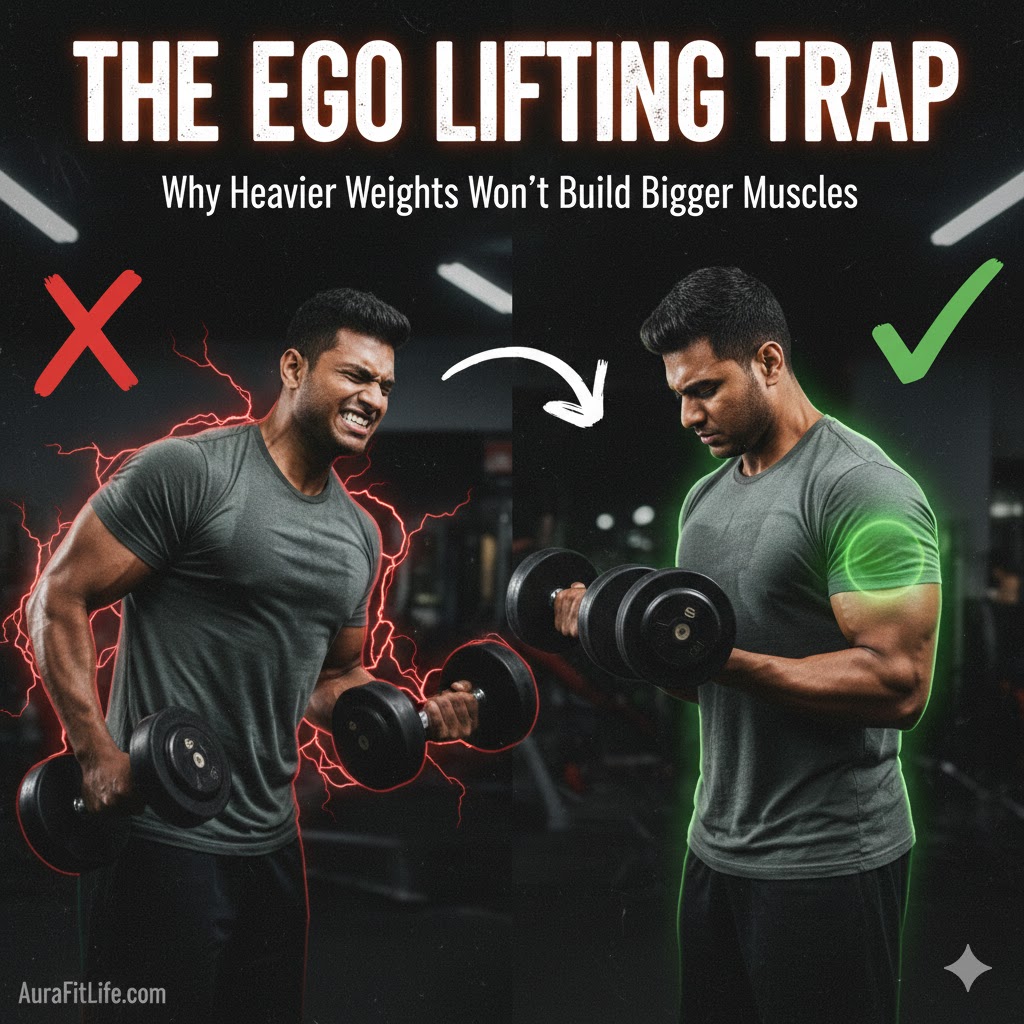
When you ego lift, you use momentum. You swing your body, you “cheat” the range of motion, and you use every muscle except the one you are trying to target.
- Example: During a Bicep Curl, if you swing your back to get the weight up, your lower back and shoulders are doing 60% of the work. Your biceps are actually getting less stimulation than if you used a lighter weight with strict form.
When you lift lighter but with 100% control, you keep the muscle under tension for longer. This “Time Under Tension” (TUT) is what actually signals the body to repair and grow the fibers thicker.
2. The Danger of “Hidden” Injuries
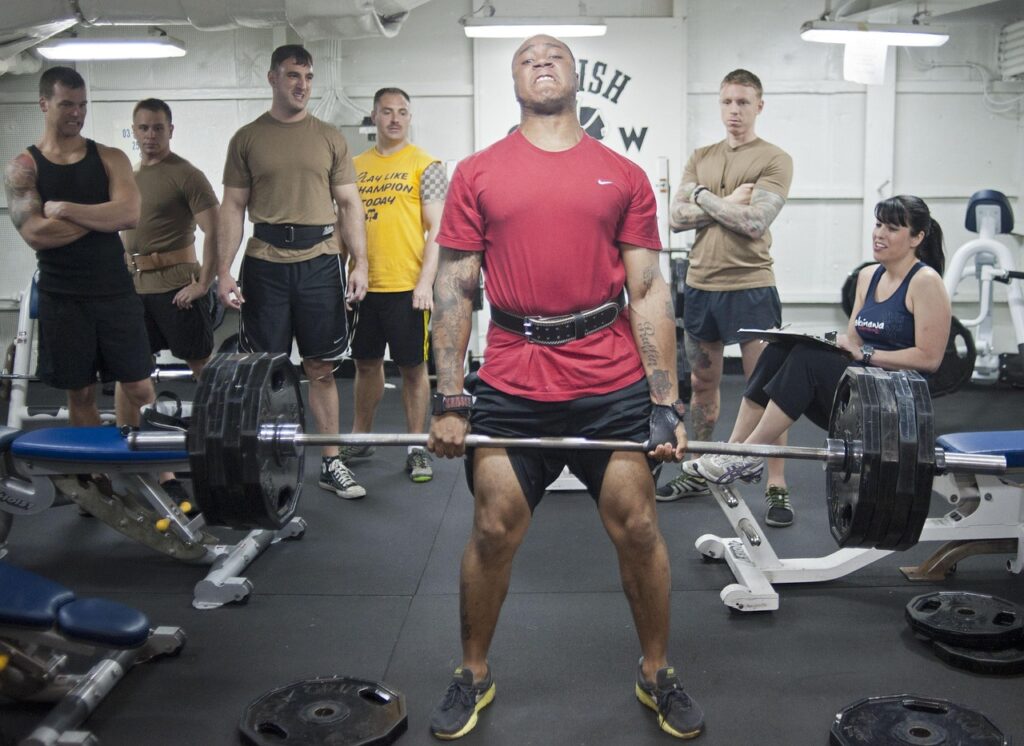
Ego lifting doesn’t just stall your gains; it actively destroys your joints. Muscles have a great blood supply and heal quickly, but tendons and ligaments do not.
When you lift weight that is too heavy for your current strength level, your joints take the brunt of the force. This leads to:
- Tennis Elbow (from heavy, swinging curls)
- Rotator Cuff Tears (from ego benching)
- Disc Bulges (from ego deadlifting)
I learned at aurafitlife.com that a 3-month injury break sets you back much further than a 10% reduction in weight ever could. Consistency is the king of fitness, and you can’t be consistent if you’re in a hospital bed.
3. The Mind-Muscle Connection: The “Feel” Over the “Look”

Ask any professional bodybuilder, and they will tell you the same thing: You must feel the muscle working.
Ego lifting numbs this connection. You become so focused on getting the weight from point A to point B that you lose the “pump.” If you are doing chest flies and you don’t feel a deep stretch and a hard squeeze in your pectorals, you are just waving your arms around.
Human Touch Tip: Next time you’re in the gym, try this. Drop the weight by 30%. On the way down (the eccentric phase), count to three. Pause at the bottom. Then explode up. I guarantee you will feel more “burn” with that lighter weight than you ever did with the heavy stuff.
4. Range of Motion (ROM) is Your Best Friend
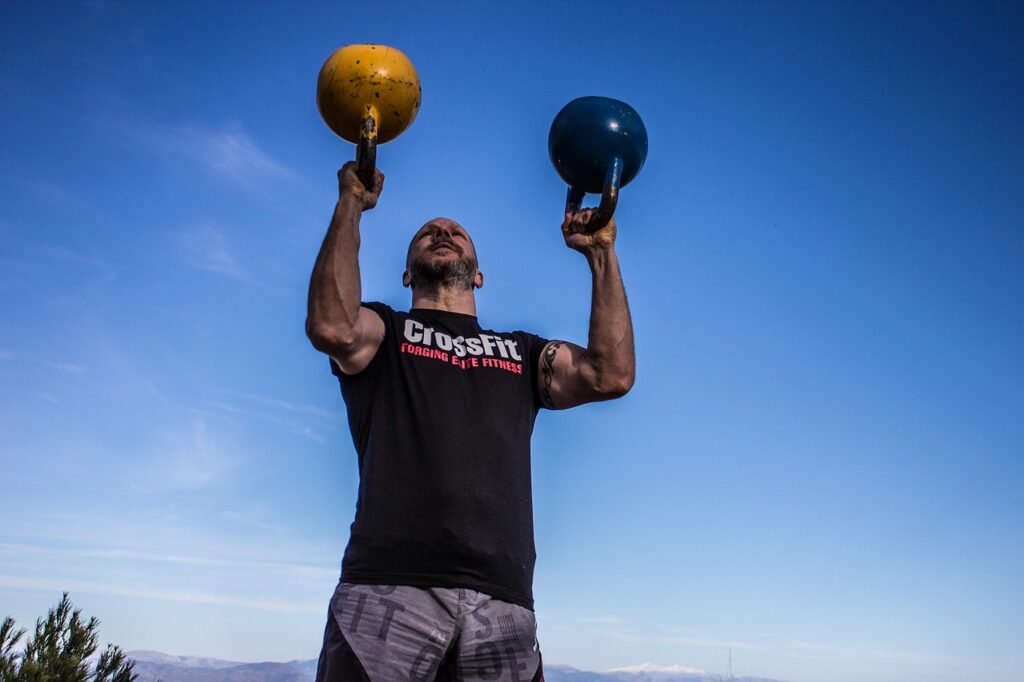
The most common sign of an ego lifter is the “Half-Rep.” We see it all the time on the leg press someone loads up 10 plates and moves the platform exactly two inches.
Science shows that a muscle grown through a full range of motion is not only bigger but stronger and more functional. By cutting the rep short to handle more weight, you are skipping the most difficult (and most beneficial) part of the exercise. You are effectively making your muscles “smaller” by not allowing them to fully develop.
How to Escape the Trap (A Step-by-Step Guide)

If you’ve realized that you might be an ego lifter, don’t worry. It’s a phase almost every gym-goer goes through. Here is how I fixed my training:
1. Leave Your Ego at the Door
Literally. Remind yourself that no one in the gym actually cares how much you are lifting. They are too busy looking at themselves in the mirror. Your only competition is the version of you from yesterday.
2. Record Your Sets
We often think our form is great until we see it on camera. Record a set of squats. Are you going deep enough? Is your back straight? Watching yourself is a humbling experience that forces you to lower the weight and fix the basics.
3. Focus on Tempo
Instead of counting reps, focus on the time. Aim for a 2-second lift, a 1-second squeeze, and a 3-second lower. This makes “light” weights feel incredibly heavy and forces your muscles to grow.
4. Education is Key
Knowledge is power. The more you understand about anatomy and how muscles actually move, the less likely you are to throw weight around recklessly. Explore aurafitlife.com for more deep dives into workout mechanics.
Conclusion: Quality Over Quantity
Building a dream physique is a marathon, not a sprint. Ego lifting is like trying to take a shortcut through a swamp you might think you’re moving fast, but eventually, you’ll get stuck or hurt.
When you prioritize form, tension, and the mind-muscle connection, you aren’t just “lifting weights” you are sculpting your body. Your muscles will get bigger, your joints will stay healthy, and you will actually become as strong as you want to look.
Visit aurafitlife.com for more tips on how to train smarter, eat better, and live a life of true wellness.
Frequently Asked Questions (FAQs)
Q1: Does this mean I should never lift heavy? No! Heavy lifting is great for strength, but only if you can maintain proper form. If your form breaks, the weight is too heavy.
Q2: How do I know if I am ego lifting? If you have to swing your body, use momentum, or can’t hold the weight at the top of the rep for at least a split second, you are likely ego lifting.
Q3: Will lighter weights really make me bigger? Yes, if you use them to create more tension and metabolic stress. High-volume training with moderate weights is a proven way to trigger hypertrophy.
Q4: Is “Cheating” ever okay? “Controlled cheating” is an advanced technique used at the end of a set to push past failure, but it should never be the foundation of your workout.
Q5: How can I track progress if I’m not adding weight every week? Track your form, your rest times, and your tempo. If you can do the same weight with better form than last week, you have officially gotten stronger.
Welcome to AuraFitLife! AuraFitLife is a wellness-focused platform providing informative content on fitness workouts, mental health awareness, and healthy living. Muhammad Azam follows ethical content guidelines and prioritizes accuracy, clarity, and reader value. We are committed to sharing practical, research-based information that supports healthier and more balanced lifestyles