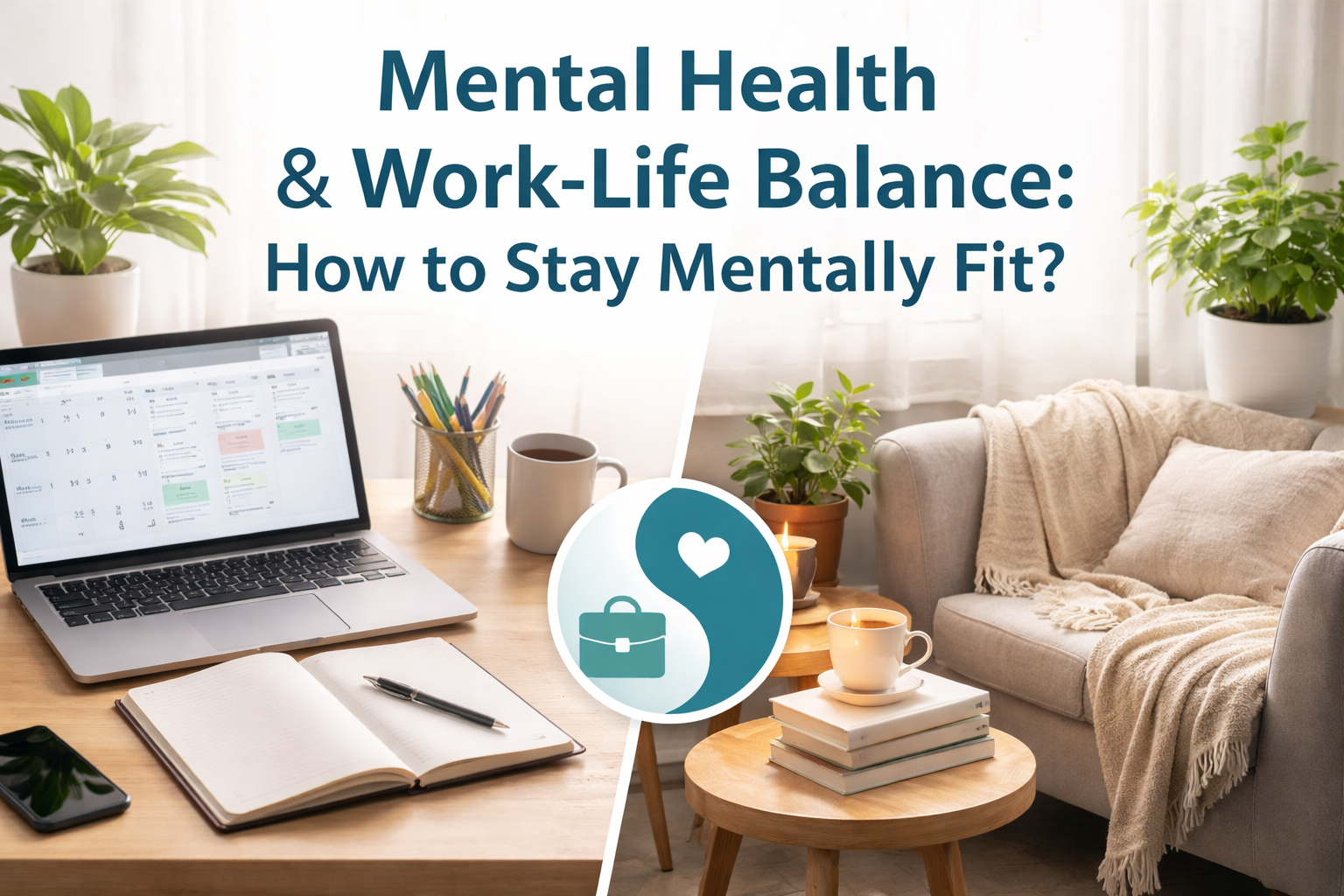
Mental Health and Work-Life Balance: How to Stay Mentally Fit?

I have often noticed that in our race to build a career, we forget to build a life that we actually enjoy living. In my journey, I’ve realized that being ‘mentally fit’ is just as important as being physically strong. Based on my observations, if you don’t find a balance now, your body and mind will eventually force you to take a break later
In today’s fast-paced world, maintaining a healthy balance between work and personal life has become one of the biggest challenges for many people. Long working hours, constant screen time, job pressure, and personal responsibilities often leave little room for rest and self-care. Over time, this imbalance can seriously affect mental health, leading to stress, anxiety, burnout, and emotional exhaustion. Understanding the connection between mental health and work-life balance is essential if we want to stay mentally fit and live a healthier, more fulfilling life.
Mental health is not just about avoiding mental illness; it is about feeling emotionally stable, mentally strong, and capable of handling daily challenges. When work starts to dominate life and personal time disappears, mental well-being is usually the first thing to suffer. This article explores how work-life balance impacts mental health and shares practical, realistic strategies to stay mentally fit in both professional and personal life.
Understanding the Link Between Mental Health and Work-Life Balance

Work-life balance refers to the ability to manage work responsibilities while still having enough time and energy for personal life, family, rest, and self-care. When this balance is disturbed, mental health often declines. Constant stress at work can spill into personal life, while personal problems can reduce productivity and focus at work.
Poor work-life balance increases the risk of chronic stress, sleep problems, irritability, and lack of motivation. Over time, these issues can lead to anxiety disorders or depression. On the other hand, a balanced lifestyle allows the mind to recover, improves emotional control, and helps people feel more satisfied and motivated in both areas of life.
Mental fitness depends on how well we manage stress, emotions, and daily pressure. A healthy work-life balance gives the mind space to relax, reflect, and recharge, which is essential for long-term mental well-being.
Common Mental Health Problems Caused by Poor Work-Life Balance
When work consistently overwhelms personal life, several mental health issues may appear. Stress is usually the first sign, followed by mental fatigue and emotional burnout. People may feel constantly tired, even after sleeping, or lose interest in activities they once enjoyed.
Anxiety can develop when work pressure feels endless and deadlines never stop. The mind stays in “work mode” even during rest time, making it difficult to relax. In severe cases, prolonged imbalance may lead to depression, where individuals feel hopeless, disconnected, and emotionally drained.
Another common issue is burnout, especially among professionals who work long hours without proper breaks. Burnout reduces creativity, concentration, and motivation, making both work performance and personal relationships suffer. Recognizing these signs early is important to protect mental health.
Why Mental Fitness Matters More Than Ever

Mental fitness is the ability to cope with stress, stay focused, and maintain emotional stability. In modern life, where digital devices keep us connected to work 24/7, mental fitness has become just as important as physical fitness.
A mentally fit person can handle pressure without feeling overwhelmed, make better decisions, and maintain healthier relationships. Mental fitness improves productivity at work and allows people to enjoy personal life without guilt or constant worry about work tasks.
By focusing on mental health and work-life balance together, individuals can build a sustainable lifestyle that supports long-term success and happiness.
Setting Clear Boundaries Between Work and Personal Life

One of the most effective ways to protect mental health is by setting clear boundaries. This means defining specific work hours and sticking to them as much as possible. Constantly checking emails or messages outside work hours prevents the mind from resting.
Creating a dedicated workspace, especially for those who work from home, helps separate professional and personal life. When work time ends, physically leaving the workspace or shutting down devices sends a signal to the brain that it is time to relax.
Learning to say no is also part of healthy boundaries. Taking on too many tasks increases stress and reduces efficiency. Respecting personal limits is essential for maintaining mental balance.
The Importance of Rest, Sleep, and Downtime

Sleep plays a critical role in mental health and emotional regulation. Poor sleep due to work stress can worsen anxiety, reduce focus, and increase irritability. Adults should aim for consistent, quality sleep to allow the brain to recover.
Downtime is not wasted time; it is necessary for mental recovery. Simple activities such as reading, listening to music, spending time with family, or enjoying a hobby help reduce mental fatigue. Regular breaks during the workday also improve concentration and prevent burnout.
Websites like https://aurafitlife.com/ often highlight the importance of balanced wellness habits that support both mental and physical health, reminding us that rest is a key part of productivity, not the enemy of it.
Managing Stress in a Healthy Way

Stress is unavoidable, but how we manage it makes all the difference. Healthy stress management techniques can significantly improve mental fitness. Deep breathing, mindfulness, and meditation help calm the nervous system and reduce mental tension.
Physical activity is another powerful stress reliever. Regular exercise releases endorphins, which improve mood and reduce anxiety. Even a short daily walk can have a positive impact on mental well-being.
Writing down thoughts or journaling can also help process emotions and clear mental clutter. These small habits, when practiced consistently, support better work-life balance and emotional health.
Work-Life Balance Through Time Management

Poor time management often leads to unnecessary stress. Planning tasks, setting priorities, and breaking large projects into smaller steps can make work feel more manageable. When work feels organized, the mind stays calmer and more focused.
Avoiding multitasking is also important. Focusing on one task at a time improves efficiency and reduces mental exhaustion. Scheduling personal time just like work meetings ensures that self-care does not get ignored.
Effective time management allows space for both productivity and relaxation, supporting long-term mental health.
The Role of Social Connections in Mental Well-Being

Human connection plays a vital role in mental health. Spending time with family, friends, or supportive colleagues helps reduce stress and feelings of isolation. Talking about problems with trusted people can ease emotional pressure and provide new perspectives.
Work-life balance makes room for meaningful relationships. When work consumes all time and energy, social connections often suffer, which can negatively affect mental well-being. Prioritizing relationships is an important part of staying mentally fit.
Creating a Sustainable Lifestyle for Long-Term Mental Health

Mental health is not improved overnight. It requires consistent habits and lifestyle choices that support balance and well-being. Eating a nutritious diet, staying active, sleeping well, and managing stress together create a strong foundation for mental fitness.
Reliable wellness platforms like https://aurafitlife.com/ focus on holistic health, emphasizing that mental well-being is deeply connected to daily lifestyle habits. Small, positive changes practiced regularly can lead to significant improvements over time.
A sustainable work-life balance helps individuals stay motivated, emotionally stable, and mentally strong throughout different stages of life.
Final Thoughts
Mental health and work-life balance are deeply connected. Ignoring this balance can lead to stress, burnout, and long-term emotional problems. By setting boundaries, managing stress, prioritizing rest, and creating time for personal life, it is possible to stay mentally fit even in a demanding world.
A balanced lifestyle does not mean avoiding hard work; it means working in a way that supports mental well-being rather than harming it. When mental health is protected, productivity improves, relationships become stronger, and life feels more meaningful.
Focusing on mental fitness today is an investment in a healthier, happier future.
Q1: What are the first signs that my work-life balance is slipping?
My Experience: I’ve found that irritability and constant fatigue are the first red flags. Based on my observations, when you start losing interest in your hobbies, it’s a sign that your mental health habits need an urgent reset. I’ve noticed that acknowledging these signs early prevents full-scale burnout.
Q2: Can a simple daily routine really improve my mental wellbeing?
Absolutely. In my experience, the brain loves predictability. I personally find that a minimalist morning routine sets a calm tone for the rest of my day. I’ve found that even small, everyday wellness habits provide a sense of control that reduces anxiety during a high-pressure workday.
Q3: How do I stay mentally fit during a particularly busy office week?
I’ve realized that “micro-breaks” are your best friend. I personally use short walks to clear my head. I’ve found that combining these breaks with desk exercises helps release both physical and mental tension. I’ve noticed that when I take care of my body, my mind stays much more resilient.
Welcome to AuraFitLife! AuraFitLife is a wellness-focused platform providing informative content on fitness workouts, mental health awareness, and healthy living. Muhammad Azam follows ethical content guidelines and prioritizes accuracy, clarity, and reader value. We are committed to sharing practical, research-based information that supports healthier and more balanced lifestyles