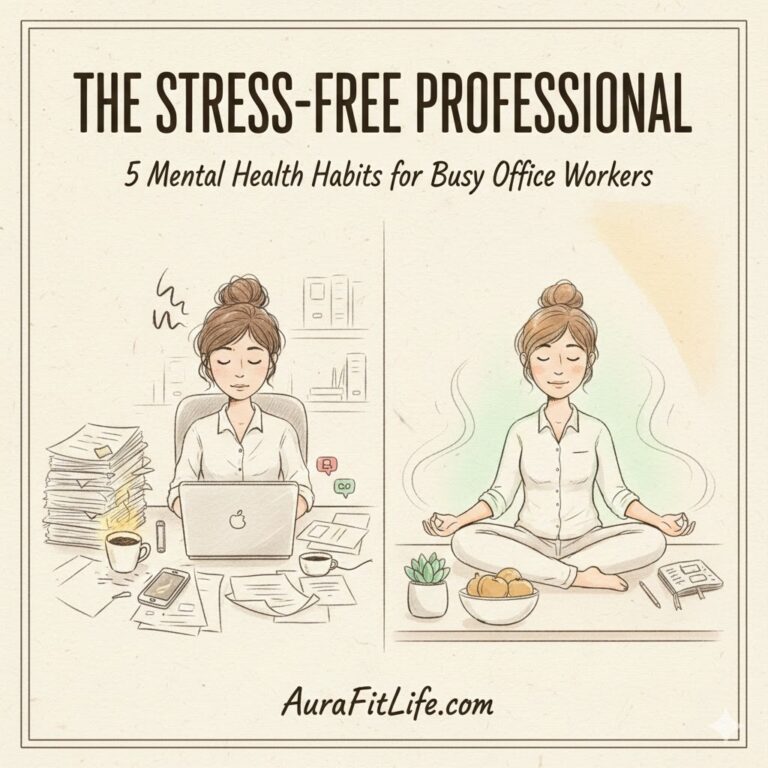

Mental Health: Simple Daily Healthy Habits

In my journey of building AuraFit, I learned that physical fitness is useless if your mind is in a state of chaos. I personally struggled with ‘digital burnout’—that feeling where your brain is constantly tired from screen time. It wasn’t until I started implementing these Simple Daily Healthy Habits that I saw a real change in my energy. Mental health isn’t a destination; it’s a daily practice of choosing peace over productivity.

Life moves so fast these days. Work pressure, money worries, planning for the future, and social media all of it can leave your mind feeling exhausted. While we often take care of our bodies, we sometimes forget to look after our mental health.
Mental health isn’t just about depression or anxiety. It’s about feeling good inside, managing stress, and living a balanced life. Small daily habits can make a huge difference.
Taking care of your mental health starts with small, consistent daily habits that promote balance and well-being. Simple practices like spending a few minutes in meditation or deep breathing each morning can reduce stress and improve focus. Regular physical activity, even a short walk or stretching routine, helps release endorphins, which naturally boost mood. Maintaining social connections, journaling thoughts, and setting aside time for hobbies or relaxation also contribute to emotional stability. Prioritizing quality sleep and limiting excessive screen time can further enhance mental clarity and resilience. By integrating these small, manageable habits into everyday life, you can support long-term mental health, increase happiness, and build a more positive, balanced lifestyle.
Why Mental Health Matters

Good mental health helps you
- Think clearly and make better decisions
- Manage stress and emotions effectively
- Maintain healthy relationships
- Stay motivated and productive
- Enjoy life more fully
Ignoring mental health can affect sleep, physical well-being, work performance, and overall happiness. That’s why caring for your mind should be a daily priority.
Signs Your Mind Needs Attention

Stress is normal, but long-term mental strain shows itself through
- Feeling constantly tired
- Getting irritated easily
- Trouble sleeping
- Feeling low or heavy
- Losing interest in activities you once enjoyed
Noticing these signs early can help you take action before stress becomes overwhelming.
Daily Habits to Boost Mental Health

1. Take a Few Minutes for Yourself
Even 10 minutes a day for yourself can make a big difference. Sit quietly, focus on your breath, and let your thoughts settle. You don’t need perfect meditation just a few moments of calm can help your mind recharge.
2. Move Your Body Regularly
Exercise isn’t only for your body it’s great for your mind too. Walking, light stretching, yoga, or simple home workouts release endorphins that reduce stress and improve your mood.
Remember, consistency matters more than intensity. Even short daily movement helps.
3. Prioritize Quality Sleep
Sleep is essential for emotional balance and mental clarity. Poor sleep can increase stress and anxiety.
Tips for better sleep:
- Go to bed and wake up at the same time daily
- Limit screens before bedtime
- Keep your bedroom quiet and comfortable
Aim for 7–9 hours of sleep each night.
4. Eat Mindfully
What you eat affects how you feel. Fresh, balanced meals support a healthy mind, while too much junk food or sugar can worsen mood swings.
Helpful foods for mental health:
- Fruits and vegetables
- Whole grains
- Nuts and seeds
- Fish rich in omega-3 fatty acids
- Plenty of water
5. Share Your Feelings
Bottling up emotions can make stress worse. Talk to trusted friends, family, or loved ones. Opening up helps lighten your mind. I personally discovered that a healthy lifestyle is not about punishment, but about nourishment. When I first started AuraFit, I tried to change everything overnight and failed miserably. It was only when I focused on small, consistent wins like a 10-minute morning walk and better hydration that I saw a permanent shift in my energy and happiness. My journey taught me that living better is a marathon, not a sprint, and it starts with the choices you make when no one is watching
Asking for help is not a weakness it’s strength.
6. Take Breaks from Social Media
Helping my own father regain his mobility through the AuraFit Protocol was one of my proudest moments. I’ve seen firsthand how fear of falling can keep older adults sedentary, but through simple home-based strength training, that fear turns into confidence. My advice to every senior reading this is to start exactly where you are today even if it’s just doing leg raises while sitting in a chair. Strength has no age limit, and the best time to reclaim your vitality is right now
Scrolling constantly can increase stress and unhealthy comparisons. Taking breaks allows you to focus on real-life connections and improves emotional balance.
7. Do Things That Bring You Joy
There were days during my early career when my physical health was perfect, but my mental health was in shambles due to chronic stress. This personal struggle led me to integrate ‘Mental Biohacking’ into the AuraFit lifestyle. I’ve found that the simple habit of a ‘Digital Detox’ for just 30 minutes before bed changed my sleep quality and mental clarity more than any supplement ever could. Taking care of your mind is the ultimate form of self-respect, and it’s the secret fuel for your physical fitness.
Even 15 minutes a day of an activity you love reading, listening to music, gardening, or creative hobbies can improve mood and reduce mental fatigue.
When to Seek Professional Help

If sadness, anxiety, or stress lasts for weeks and affects your daily life, consider professional guidance. A therapist or mental health professional can provide strategies and support tailored to you.
Remember: seeking help is a sign of courage, not weakness.
Conclusion
Mental health care is not a luxury it’s essential. You don’t need to be perfect; you just need to start caring for your mind.
Small daily habits, consistent effort, and kindness to yourself are the keys to emotional balance and mental wellness.
Simple daily habits can make a meaningful difference in mental health and emotional balance over time. For more natural and practical tips to support mental well-being every day, visit https://aurafitlife.com/ and explore easy-to-follow wellness guides.
Article 3: Daily Healthy Habits for Mental Health
Q1: Which simple daily healthy habits for mental health are most effective? Answer: From my personal journey, “Digital Detox” and “Morning Sunlight” are game-changers. Taking just 15 minutes away from screens to breathe and see natural light can reset your nervous system and reduce anxiety instantly.
Q2: How does the AuraFit Protocol connect physical habits to mental health? Answer: We believe the mind and body are one. When you move your body, you release endorphins that heal your mind. By following these daily healthy habits, you aren’t just getting fit—you are building mental resilience against daily stress.
Welcome to AuraFitLife! AuraFitLife is a wellness-focused platform providing informative content on fitness workouts, mental health awareness, and healthy living. Muhammad Azam follows ethical content guidelines and prioritizes accuracy, clarity, and reader value. We are committed to sharing practical, research-based information that supports healthier and more balanced lifestyles